

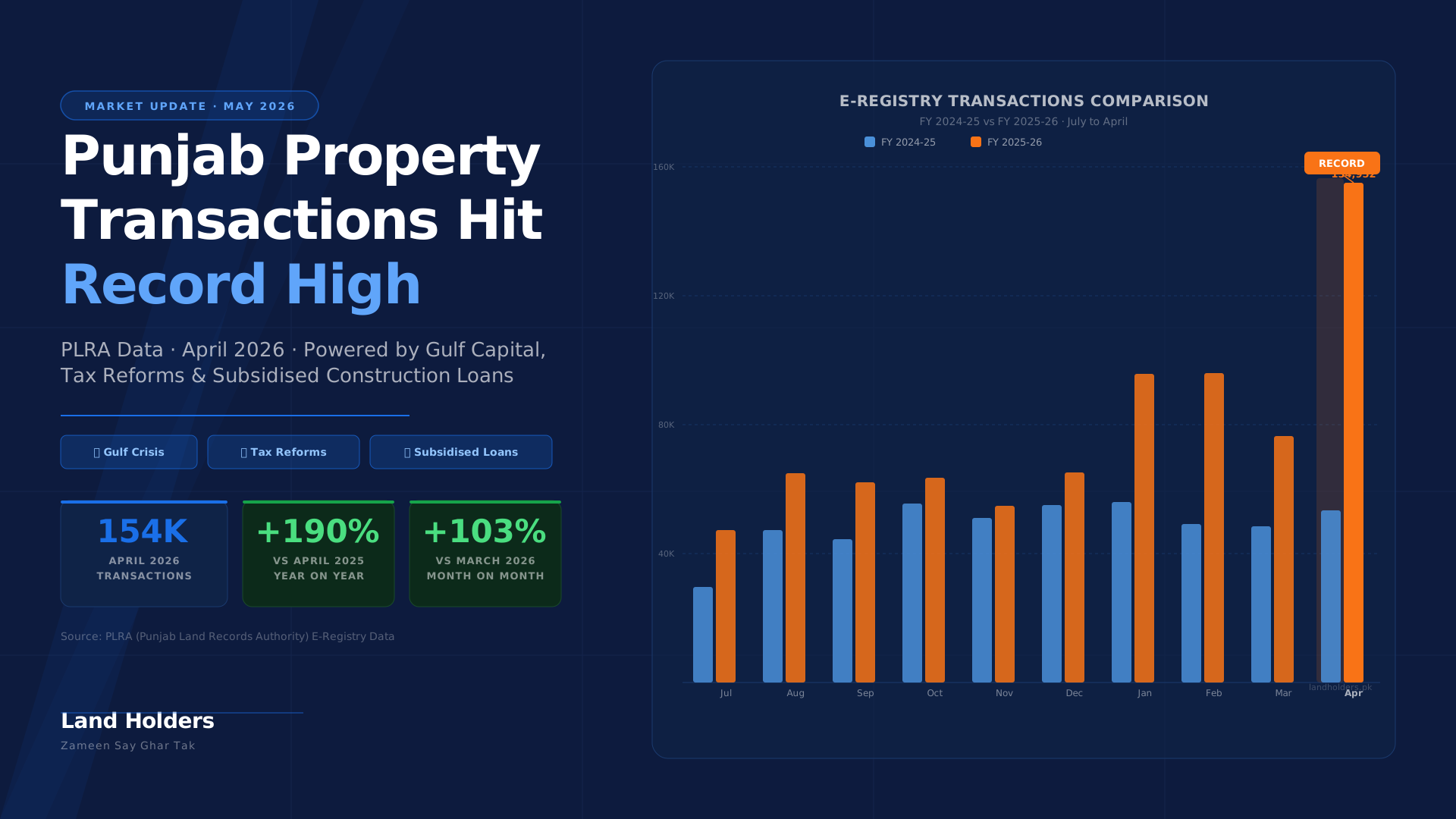
PLRA data reveals 154,952 e-registry transactions in April 2026 — tripling year-on-year and doubling month-on-month. Three powerful forces are converging at once.
Punjab's real estate market has recorded a watershed moment. According to Punjab Land Records Authority (PLRA) e-registry data, property transactions in April 2026 reached 154,952 — nearly three times the 53,497 recorded in April 2025, and more than double the 76,338 transactions registered just one month earlier in March 2026.
This is not a seasonal blip. The FY2025-26 data shows a consistent, accelerating trend across every month compared to FY2024-25. What was already a recovering market has now entered a full-scale expansion phase. Three structural forces are responsible — and they are unlikely to reverse anytime soon.
The Numbers: Month-by-Month Comparison (July 2025 – April 2026)
The PLRA comparative chart tells a compelling story. FY2025-26 (orange) has outpaced FY2024-25 (blue) in every single month — and the gap has been widening dramatically since January 2026.
The January–April 2026 stretch is particularly striking. What begins as a moderate gap in the early months becomes a chasm by April. The 154,952 April figure is not just a monthly record — it signals a structural shift in market velocity.
Three Forces Behind the Surge
No single factor explains a 190% year-on-year jump. Three distinct but reinforcing forces have created a perfect storm for Pakistan's real estate market.
Force 1 — The Gulf Crisis and the Flight of Overseas Capital
Pakistan has approximately 9 million citizens working abroad, with the Gulf region — Saudi Arabia, UAE, Kuwait, Oman, Qatar, Bahrain — accounting for the vast majority. These workers collectively remit billions of dollars annually, and a significant portion historically finds its way into real estate back home.
The recent geopolitical tensions in the Gulf region have introduced a degree of uncertainty that is prompting many overseas Pakistanis to reconsider where their savings are held. When the future of a region feels uncertain, capital moves toward the familiar — and for most Pakistanis, that means property in cities like Lahore, Karachi, and Islamabad.
This dynamic is not new. Similar patterns were observed during earlier Gulf tensions in 2019 and the COVID-disruption period of 2020-21. However, what is different this time is that the channel for investing is much smoother than before. Digital property portals, online payment plans, and direct bank-to-agent transfer mechanisms mean overseas buyers can purchase a plot or apartment in Lahore from Riyadh or Dubai in a matter of days.
Force 2 — Real Estate Tax Reductions: Buying Got Cheaper
The Pakistani government has, over the past 18 months, made a series of adjustments that meaningfully reduced the cost of property transactions. These include reductions in capital gains tax (CGT) on property held for shorter periods, rationalisation of Federal Excise Duty (FED) on commercial properties, and adjustments to stamp duty and registration fees at the provincial level.
The combined effect is significant. For a typical residential plot transaction worth PKR 1 crore in Lahore, the reduction in taxes can amount to several hundred thousand rupees — money that previously went to the government now stays with buyers and sellers, and crucially, removes a friction that was keeping potential transactions on hold.
section-7e
The abolition of Section 7E — the deemed income provision that taxed the notional rental value of all property holdings regardless of actual rental income — was a watershed moment. It had become a significant disincentive to holding multiple properties and was widely blamed for suppressing formal transaction volumes. Its removal has released pent-up market activity.
- ✓ Section 7E deemed income tax on property — abolished
- ✓ Capital Gains Tax holding period reduced — lower rates for shorter holds
- ✓ Stamp duty rationalisation across Punjab districts
- ✓ Simplified e-registry process — faster, cheaper transfers
The e-registry system itself deserves credit here. By digitising and streamlining the property transfer process across Punjab, PLRA has removed much of the friction, cost, and time that previously made formal registration a burden. More transactions are now being registered formally — which means the data we are seeing likely reflects not just more activity, but more recorded activity.
Force 3 — Subsidised Construction Loans: The Middle Class Enters the Market
Perhaps the most consequential structural change for long-term market health is the government's subsidised housing loan scheme — offering up to PKR 10 million for construction on plots up to 5 Marla at subsidised interest rates.
This is significant because it specifically targets the segment of the market that was previously priced out. A family that owns a 5 Marla plot in Lahore's peripheral areas — Etihad Town, Wapda Town, Union Town — but could not afford construction costs can now access meaningful financing to build their home.
| Maximum Loan Amount | PKR 10,000,000 (1 Crore) |
| Eligible Plot Size | Up to 5 Marla |
| Purpose | New construction on owned plot |
| Rate Type | Subsidised (below market rate) |
The knock-on effect on property transaction volumes is logical: when construction financing becomes accessible, demand for residential plots rises. Buyers who were sitting on the fence — waiting for interest rates to fall or savings to accumulate — now have a viable path to ownership. This pulls forward purchase decisions.
Combine this with the Gulf capital inflow (which tends to target the mid-range and premium plot segment) and the tax reductions (which benefit all buyers), and you have a market where demand has been simultaneously stimulated at the top, middle, and bottom simultaneously — a rare configuration.
What This Means for Lahore Property Investors Right Now
Record transaction volumes are both a sign of health and a signal. When markets move fast, the premium for timing rises. The projects that will benefit most from this environment are those with transparent pricing, clear payment plans, and strong developer track records — characteristics that matter most when buyers are making decisions quickly.
In Lahore specifically, several types of investments are well-positioned within this environment:
- LDA-approved commercial plots — Demand is rising fastest where rental yields are visible. Commercial plots in projects like Etihad Town Phase 2 on Pine Avenue offer structured payment plans alongside commercial upside.
- Residential plots in pre-launch phases — Etihad Town Phase 4, currently at pre-launch pricing, sits adjacent to the already-established Phase 2 and Phase 3, giving investors a location premium without the fully-priced market rate.
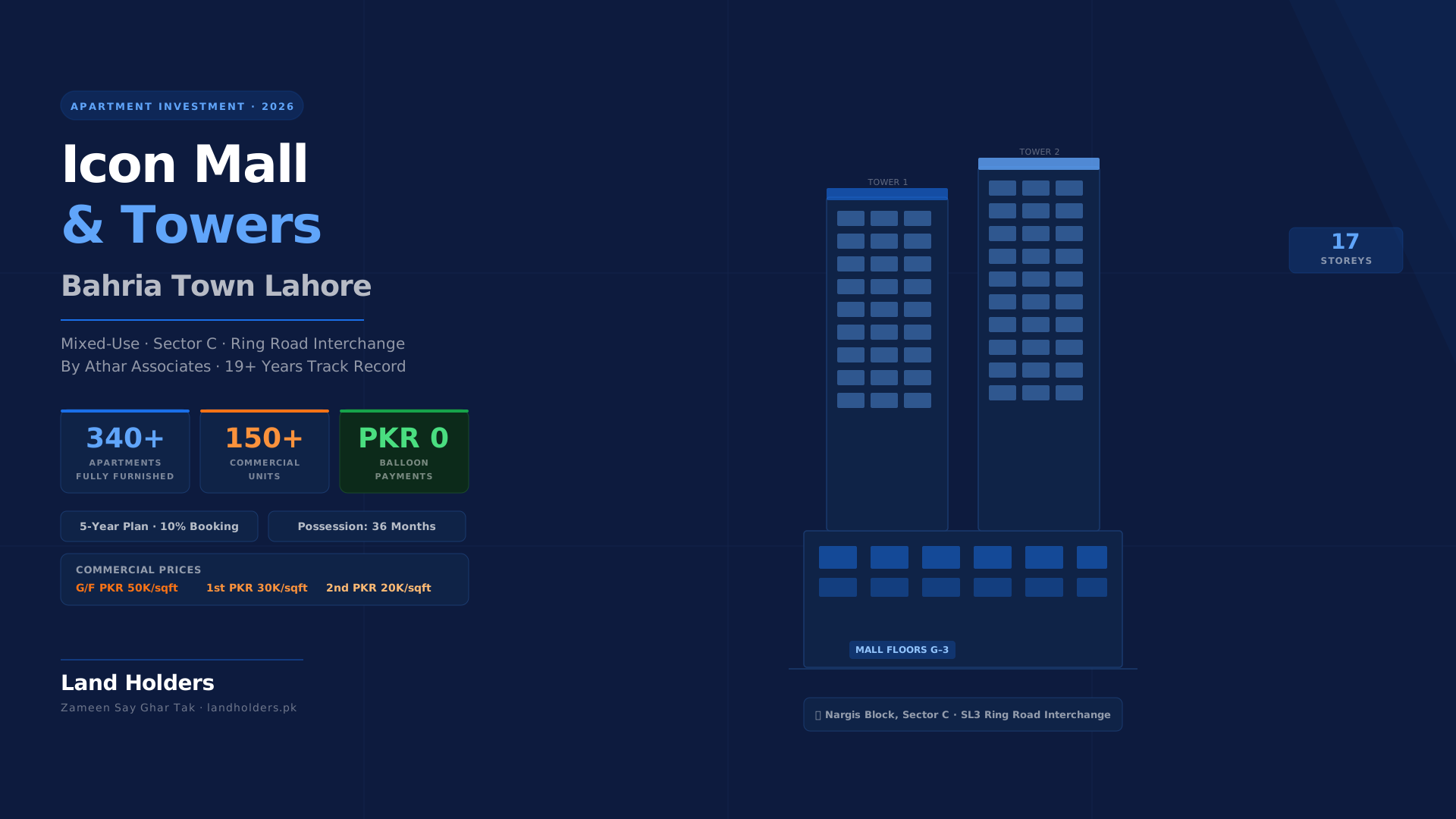
- Ready apartments in gated developments — With construction loans now available, completed or near-complete apartment projects in Bahria Town Lahore (D Heights, Icon Mall) offer a direct route for end-users.
The data from PLRA suggests the market is not speculative — transaction volumes of this magnitude require real buyers completing real transfers. This is fundamental demand, not paper shuffling.
The Outlook: How Long Does This Last?
Booms driven by multiple converging factors are typically more durable than single-driver surges. Here, the Gulf crisis provides an immediate capital injection, but the tax reforms and subsidised loans are structural — they persist beyond any geopolitical cycle.
The key risk to watch is interest rate policy. The State Bank of Pakistan has been reducing the policy rate through 2025 and into 2026, which has made borrowing cheaper and reduced the opportunity cost of holding property. If inflation re-accelerates and rates rise, some demand momentum could moderate.
However, for the next 12-18 months, the structural setup remains strongly supportive. FY2025-26 is shaping up to be one of the strongest years for Punjab property markets in recent memory — and the April 2026 data confirms this is not a prediction but an observable reality.
Frequently Asked Questions
Our team at Land Holders specialises in Bahria Town and Etihad Town projects — with exclusive deals, transparent pricing, and guidance for both local and overseas investors.
Join The Discussion